Saving
Inflation is the reason cash needs a job description
A cash balance does not change, but what it buys does, so the useful question is not how much it earns but what it is being held to do.
By Pranav Kulkarni4 min read
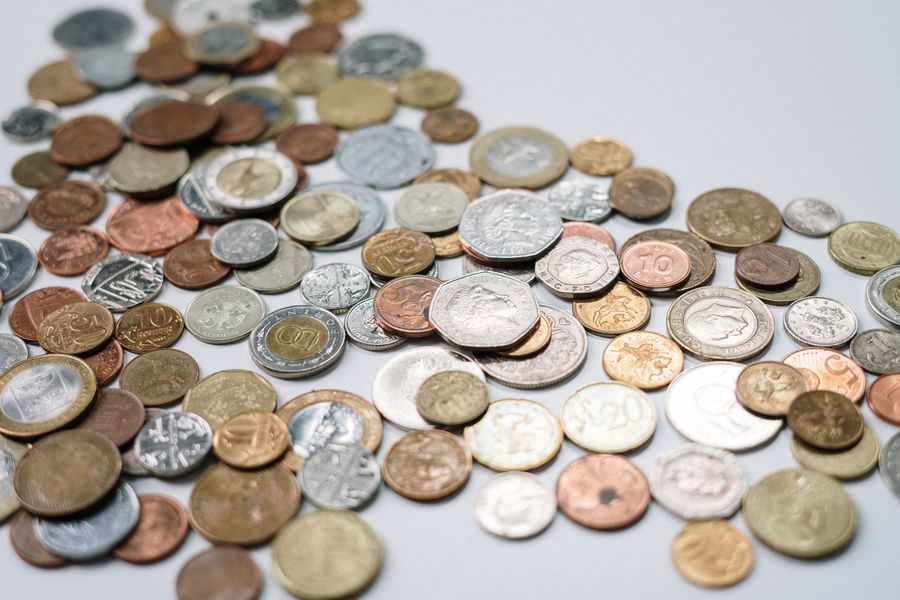
Stable in name, moving in substance
The appeal of cash is that the number does not move. Put an amount away and the same amount is there next year, which feels like the absence of risk and is often described that way. The number is indeed stable. What that number buys is not, and the gap between those two facts is where inflation lives.
Economists label the distinction nominal and real. The nominal value of a cash balance is the figure on the statement. The real value is what the figure can be exchanged for, and it falls whenever prices rise. Nothing was lost in any way you could point at, which is precisely what makes the loss easy to ignore.
This is not an argument against holding cash. It is an argument for knowing what the holding is costing, so that the decision to hold it is deliberate rather than a default.
The erosion arithmetic, done slowly
Take an illustrative inflation rate of 3% a year and hold it steady, which no real rate does. After one year, money buys about 97% of what it did. The mistake is to assume ten years costs 30%, because each year’s reduction applies to what was left after the previous one — the same compounding that helps a balance grow, working in the opposite direction.
The actual figure is 0.97 raised to the tenth power, which is roughly 0.74. Ten years at that illustrative rate leaves about three quarters of the purchasing power. Twenty years leaves a little over half. At an illustrative 5% instead, ten years leaves around 60%.
None of those numbers is a prediction, and inflation rates vary enormously by country and by period. The shape is the point: the loss is gradual, compounding, and entirely invisible on a statement that reports only the nominal figure.
Real return is one subtraction
Interest on cash pushes back against this, so the meaningful figure is the difference between the two. Nominal return minus inflation is the real return, and it can perfectly well be negative — an account paying an illustrative 2% while prices rise at 3% is losing about 1% of purchasing power a year while the balance visibly grows.
That combination is common enough to be worth expecting rather than treating as an anomaly. It is also why a headline rate on its own tells you very little. A high rate during a period of high inflation may be worth less in real terms than a lower rate during a quiet one.
There is a personal wrinkle too. Published inflation measures track a general basket, and no household spends like the basket. A household whose costs are dominated by categories rising faster than average is experiencing a higher rate than the published figure, and the reverse holds as well.
The jobs cash is uniquely good at
Set against all that, cash does things nothing else does. It is worth what it says on the day you need it, it can be reached quickly, and it requires no decision about when to sell. For an emergency buffer, for money committed to a purchase within a short horizon, and for anything where the amount must be certain, those properties are the requirement rather than a compromise.
Seen that way, the loss to inflation is the price of certainty rather than a mistake. A short holding period also limits the damage: money held for six months loses a fraction of a year’s erosion, which is a small price for knowing the amount will be intact.
The problem is not cash. It is cash without a stated job — balances that accumulate in an everyday account for no particular reason and stay there for years, quietly doing the one thing cash is bad at, which is waiting a long time.
Where the trade-off becomes an actual decision
The tension sharpens as the horizon lengthens. Over decades, the erosion compounds into something substantial, which is the standard argument for not holding long-term money in cash. But the alternatives fluctuate, can fall in value, and may be worth less at the moment they are needed, so this is a choice between different kinds of risk rather than a choice between risk and safety.
How that trade should be struck is genuinely contested, and the answer depends on the horizon, on how much certainty a household needs, on what else it holds and on what happens if the money falls short. Those are not details; they are the whole question.
The general habit worth taking from the arithmetic is narrower and safer: give every balance a purpose and a timeframe, and check that cash is the right instrument for that particular job. Where the sums matter, a regulated adviser is the right person to weigh the alternatives against your circumstances.
Common questions
Does a high interest rate mean my cash is safe from inflation?
Only if it exceeds inflation, and the comparison has to be made in the same period. A rate that looks generous during a period of rapidly rising prices can still leave purchasing power falling. The number worth tracking is the difference between the two, not either one alone.
Why does my own cost of living seem to rise faster than the published rate?
Published measures average a broad basket of goods and services, and no household matches the average. If your spending is concentrated in categories rising faster than the general rate — which varies by country and by year — your personal experience will be of a higher figure.
How much cash is too much to hold?
There is no general figure, because it depends on what the cash is for. A useful test is whether each balance has an identified purpose and timeframe. Money with a job and a near date is doing what cash does best; money with neither has usually ended up there by accident.
Pranav joined to cover spending, saving, debt and stayed for the awkward questions and is happiest when a piece answers the question completely.