Investing Basics
Risk means one thing to a saver and something else to an investor
The same word covers the chance that a balance falls and the chance that it fails to keep up, and the two dangers pull in opposite directions.
By Rosa Iglesias3 min read
One word, at least three meanings
Risk gets used as though it were a single quantity that a person has more or less appetite for. It is not. At least three distinct things travel under the name: the chance that a balance moves about in the short term, the chance that some of the money never comes back, and the chance that the money is intact but no longer buys what it was meant to buy.
A saver holding cash has almost none of the first two and a great deal of the third. An investor holding a broad spread of shares has a good deal of the first, some of the second, and considerably less of the third over long periods. Neither position is safe in the general sense, because there is no such position.
This is why conversations about risk tolerance so often go nowhere. Two people can agree that they want low risk and mean opposite things by it, and the arrangement that satisfies one of them will fail the other.
Volatility is movement, and movement is not loss
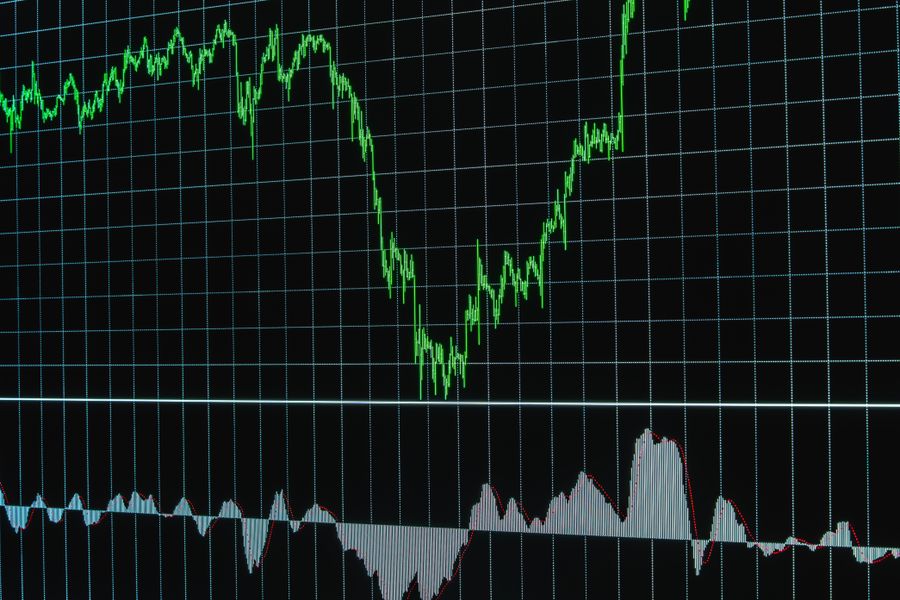
The most commonly measured form of risk is how much a value moves around. It is measurable, which is why it dominates the discussion, and it is the least directly harmful of the three provided the money is not needed while the movement is happening.
A balance that falls and later recovers has cost its owner nothing except discomfort, assuming nothing was sold on the way down and nothing was needed at the bottom. Both of those assumptions can fail, which is what converts volatility into actual damage. The mechanism that does the converting is the requirement to sell.
So volatility is dangerous in proportion to how likely you are to need the money soon, and comparatively harmless otherwise. That makes it a risk about timing rather than about the asset itself, which is a different sort of thing from the other two.
Permanent loss is a separate category entirely
The second meaning is the chance that money does not come back at all — a single holding that fails, an institution that collapses, an arrangement that turns out not to have been what it appeared. This is the risk that recovery cannot fix, because there is nothing left to recover.
It behaves differently from volatility in every respect. Spreading money across many holdings reduces it substantially, because a single failure then affects a small share. Time does not reduce it; a failed holding does not recover with patience. And it is the risk most closely associated with concentration, complexity and anything that cannot be readily understood.
Confusing the two produces poor decisions in both directions. Someone who treats every fall as permanent sells at exactly the wrong time. Someone who treats every permanent loss as a temporary fall holds on to something that is not coming back.
Shortfall risk is the one that grows in the dark
The third meaning is the risk of arriving at a future date with less purchasing power than was needed. It has no daily price movement, produces no alarming statements and is entirely invisible month to month. It also affects the apparently safest arrangements most heavily.
A balance that does not move at all still loses ground against rising prices, and over long periods that erosion accumulates in the same compounding way that growth does. For money that has a job to do in twenty years, this is frequently the largest of the three risks, and it is the one nobody feels.
The awkward consequence is that reducing volatility to nothing generally increases shortfall risk. There is no arrangement that removes both, which is the actual trade-off underneath most of the discussion about being cautious with money.
Which risk matters depends on what the money is for
Money needed in eighteen months has a volatility problem and essentially no shortfall problem, because prices will not move far in that time and a fall of a quarter would be a disaster. Money not needed for twenty-five years has the reverse profile. Same household, same person, entirely different answers.
This is why the question of how much risk someone can tolerate is less useful than the question of when each pot of money is needed. The second has an answer that does not depend on mood, and it constrains the sensible options far more tightly than a self-assessment of temperament does.
What follows from that for any particular household depends on income, obligations, existing buffers and local circumstances, none of which a general article can see. This describes what the words mean; a decision of any size belongs with a regulated adviser who can look at the whole position.
Common questions
Is cash risk-free?
It is close to free of volatility and, within whatever protections apply locally, of permanent loss. It carries the third risk in full, since a balance that does not change buys steadily less as prices rise. Whether that matters depends entirely on how long the money is being held.
Can risk be reduced without reducing return?
Spreading money across many holdings reduces the risk attached to any single one without an obvious cost, which is the closest thing to a free improvement in this field. Reducing the risk that everything falls together generally does involve giving up expected return, and that trade cannot be avoided.
How do I know which risk I should be worried about?
Start from when the money is needed rather than from how you feel about markets. A short horizon makes movement the dominant concern; a long one makes purchasing power the dominant concern. The horizon is a fact about your plans, which makes it a firmer starting point than an assessment of temperament.
Rosa has written about spending, saving, debt for most of the last decade and is unreasonably interested in the detail nobody else checks.